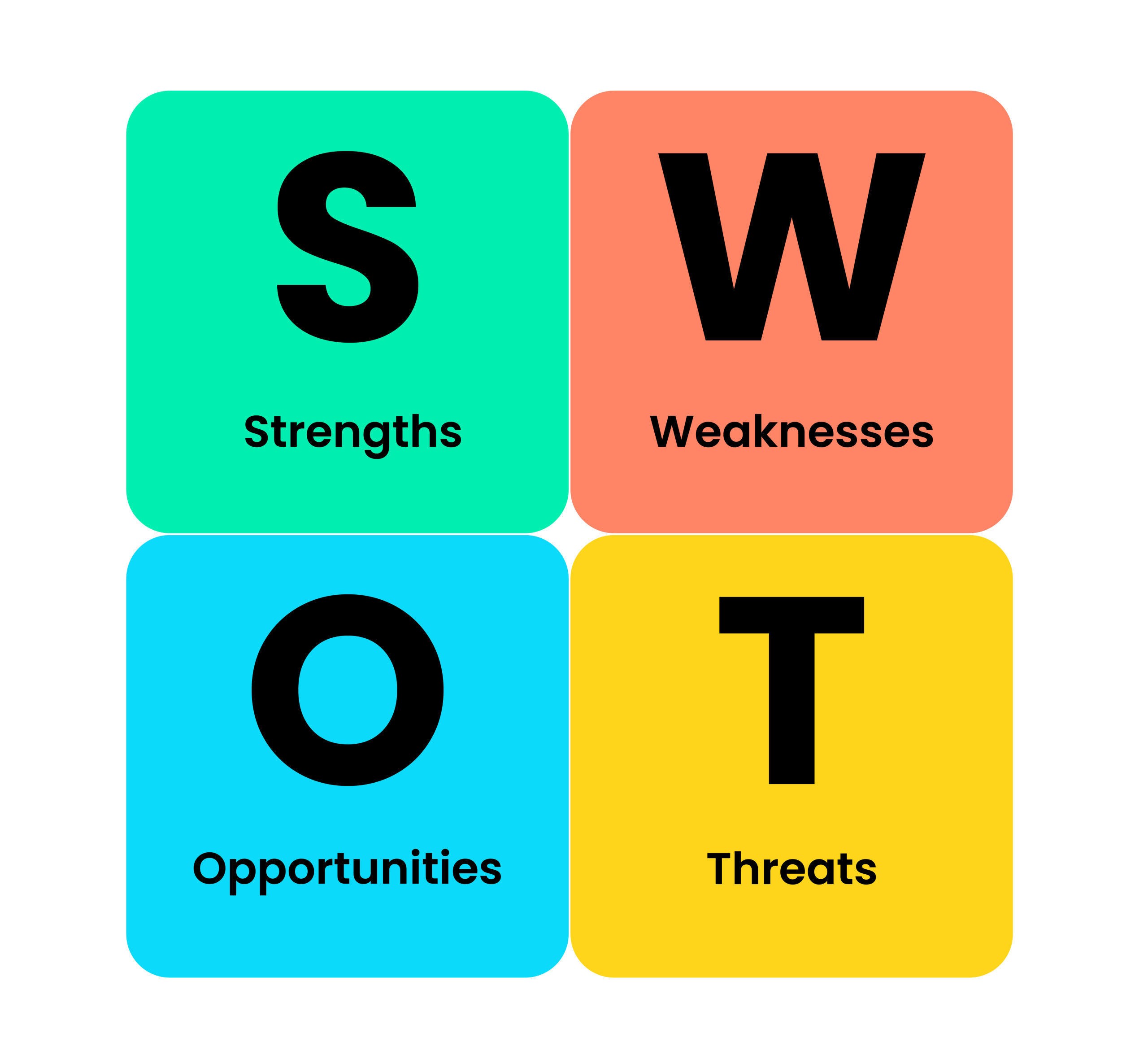
SWOT stands for strengths, weaknesses, opportunities, and threats, serving as an analytical framework utilized by companies to evaluate their position within their industry. It aids in identifying both internal and external pain points, while also monitoring competitors. SWOT Analysis is pivotal during the ideation stage, initiating the exploration of potential solutions.
This tool, adaptable in various formats, finds application in strategic planning, product development, enhancement, competitive scrutiny, and marketing. After conducting a SWOT analysis, one can discern the interrelations between the four categories to pinpoint process design opportunities and threats.
Consider how strengths can be leveraged to exploit opportunities or counter threats. Evaluate weaknesses to either mitigate threats or seize opportunities. Reflect on how to capitalize on opportunities to bolster strengths or mitigate weaknesses. Additionally, strategize on minimizing threats to safeguard strengths or address weaknesses.
By addressing these questions, a plethora of ideas and solutions can emerge, facilitating the enhancement of process design and the achievement of set goals.
Design thinking is an approach to problem-solving that emphasizes understanding user needs, exploring creative solutions, and prototyping and testing ideas. On the other hand, a SWOT analysis assists designers in pinpointing strengths, weaknesses, opportunities, and threats within the design process.
Identifying Strengths in Current Designs:
For an existing product, there are specific product data points available for analysis.
• Performance Metrics: Evaluate loading times, responsiveness, and overall performance to highlight technical strengths.
• User Satisfaction: Analyze user feedback, reviews, and satisfaction metrics to pinpoint aspects of your design that users love.
• Usability Testing: Conduct usability tests to identify features that contribute to a positive user experience.
Recognizing Weaknesses in Current Designs:
The same data used to identify strengths can also reveal weaknesses. Additionally, compare your product with competitors for benchmarking.
• User Feedback Analysis: Pay attention to common complaints, recurring user issues, and feedback indicating areas for improvement.
• Usability Testing: Uncover pain points by observing user interactions and identifying obstacles in the user journey.
• Competitor Benchmarking: Compare your product against competitors to pinpoint areas where your design falls short.
Exploring Opportunities for Improvement:
When exploring opportunities, consider broader market and technology trends, not just existing customer needs.
• User Trends and Preferences: Keep abreast of emerging trends and changing user preferences to identify opportunities for design enhancement.
• Competitive Analysis: Analyze competitors’ products to identify features or trends that can be integrated into your design.
• Technological Advancements: Stay informed about new technologies that can enhance your product’s features and capabilities.
Strengths:
Weaknesses:
Opportunities:
Threats:
It’s a blend of various informational verticals that complement each other along with relying on good old gut instinct:
Here’s an example of SWOT analysis for our product (E-Commerce website )
References:
https://www.prodpad.com/blog/swot-analysis-product/
https://www.springboard.com/blog/design/design-thinking-process

